
Reimagining the Sacajawea Hotel With Gallatin College’s Interior Design Students
11/16/2026
When Starry Night Lodging acquired the historic Sacajawea Hotel in Three Forks earlier this year, a full redesign wasn’t at the top of the to-do list. But a chance meeting on the very day of the purchase sparked a partnership that is now bringing fresh ideas, deep historical research, and a whole lot of student enthusiasm to one of Southwest Montana’s most beloved landmarks.
This fall, Starry Night teamed up with the Interior Design Program at Gallatin College, inviting nearly 30 students to develop design concepts for two of the hotel’s signature spaces: the Sac Bar and Pompey’s Grill.
A Serendipitous Start
The partnership began, fittingly, at Pompey’s Grill.. Katie Rasmussen, Interior Design Program Director at Gallatin College, has been a longtime regular at the Sacajawea. One evening, a bartender introduced her to the hotel’s new owner, Eric Sheckleton, founder and owner of Starry Night Lodging.
“I always joke with my students about the importance of networking, and that the best place you can network is sitting at the bar,” Rasmussen said. “We just got to talking, and it seemed to click. On my bucket list as a designer has always been to do a themed bar or themed restaurant.”
For Sheckleton, the idea fit naturally with Starry Night’s commitment to community and stewardship.
“I love the idea of working with a community,” Sheckleton said. “We had some spaces over the next year or two to refresh, and we also have some big, bold plans for things we’re going to be adding and improving. I really love the idea of giving local students an opportunity to have a real-world project. It gives them the opportunity to work on something tangible and lasting, while giving us access to ideas that are out of the box, as opposed to going to a design firm and getting one idea.”
A First for Gallatin College
Gallatin College is Montana State University’s two-year college, serving Southwest Montana from its home in Bozeman. Its Interior Design program teaches students to use manual and computer drafting, space planning, and sketching, alongside knowledge of construction and materials, to bring their ideas to life.
In past years, Rasmussen’s residential studio students designed for hypothetical clients, then for real homeowners. The Sacajawea project marks the program’s first collaboration with a community partner.
“This project is so much more realistic and layered than some of our past projects,” Rasmussen said. “I have never seen my students so excited about a project as this one.”
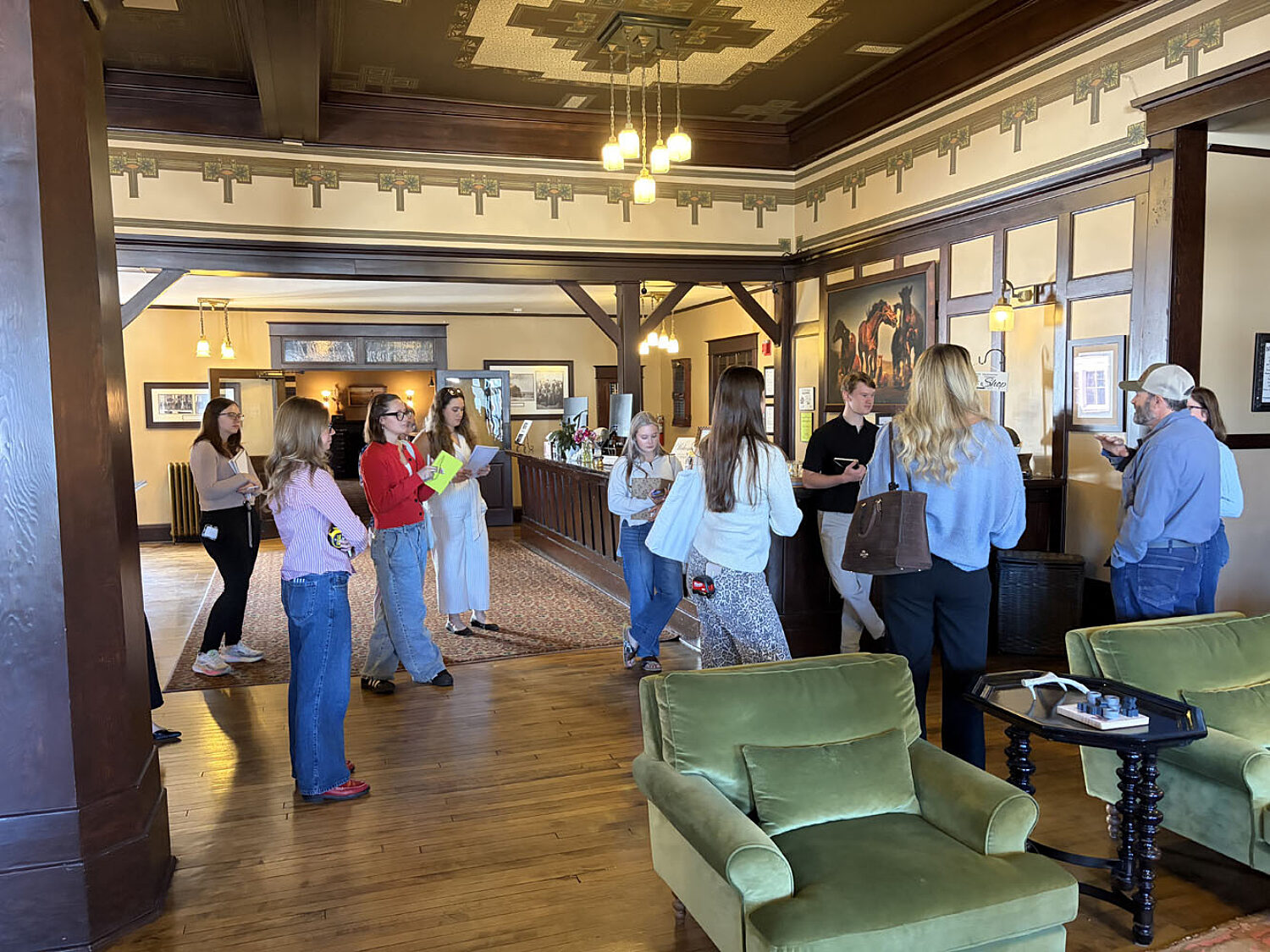
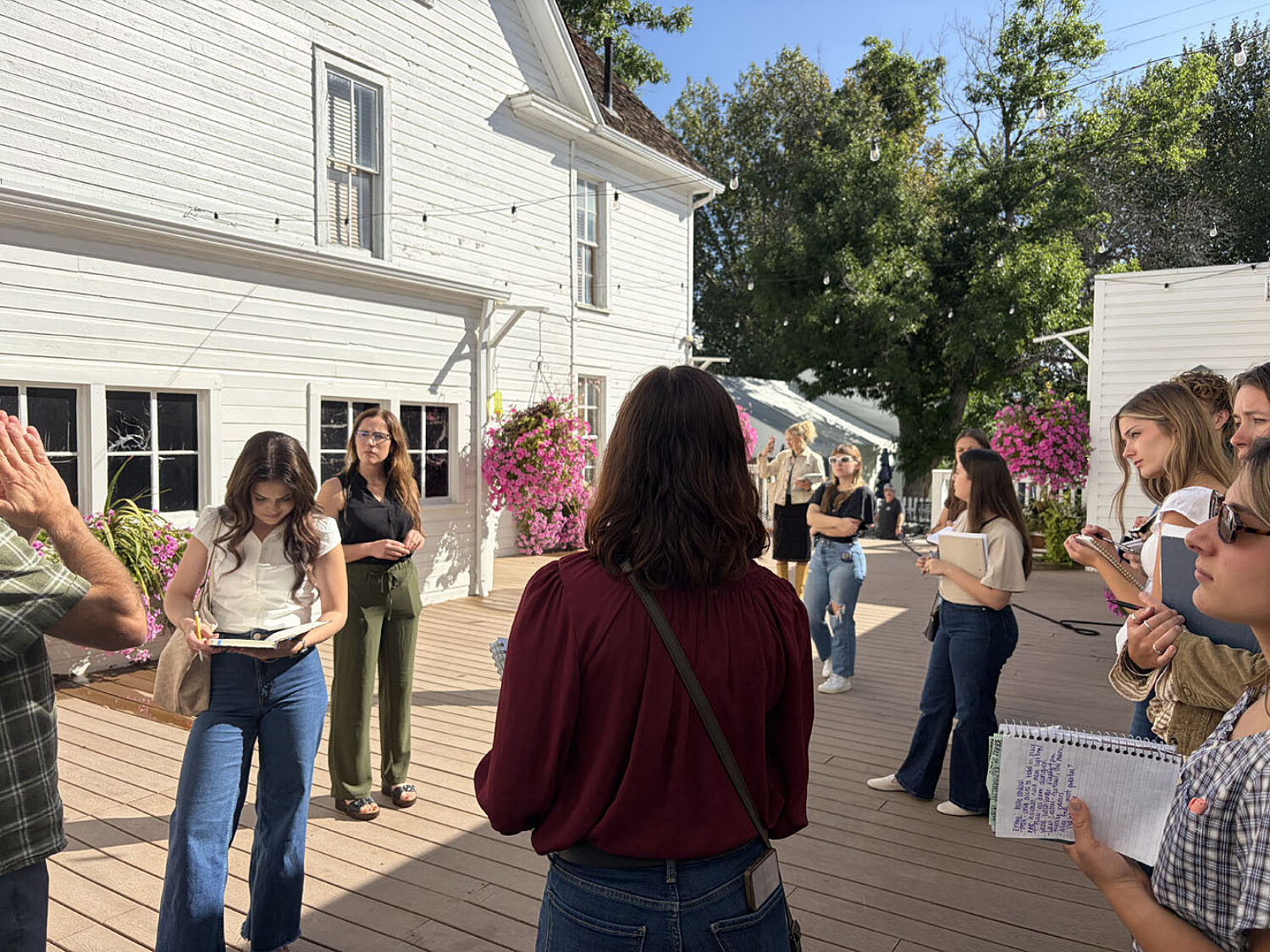
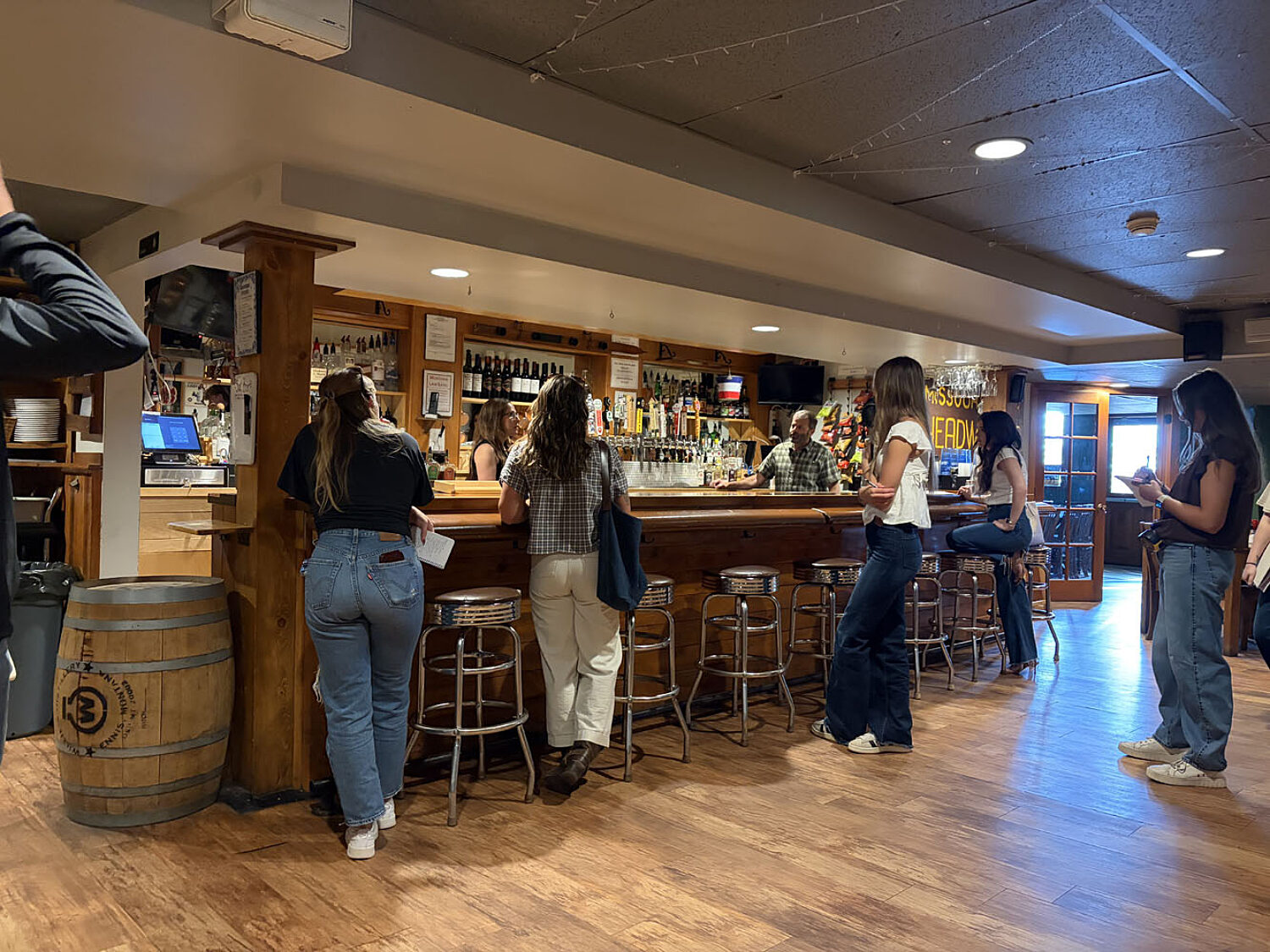
That excitement has extended well beyond the classroom. Students have worked directly with a local architect, learning to ask structural questions and navigate the realities of designing within an existing building. Many of them also returned to the hotel on their own time, sitting for hours in Pompey’s Grill and the Sac Bar, interviewing bartenders and guests along the way.
“What that showed me is that they understood Eric’s not really the client,” Rasmussen said. “The town of Three Forks is their client.”
Designing With History in Mind
Before sketching a single floor plan, students dove into the history of the hotel and the region, from the original people, to the Lewis and Clark Expedition to Three Forks’ move from Old Town to the new townsite along the Milwaukee Railroad. They visited museums, explored the campus archives, and connected with the Three Forks Historical Society.
There’s plenty to work with. Three Forks is roughly the site of where Sacajawea, a Shoshone child, was kidnapped by the Hidatsa people. Upon her return with Lewis and Clark, Sacajawea recognized the landscape and confirmed they were nearing Shoshone territory.
Pompey’s Grill now sits within one of the original structures of the Madison House, a hotel that was split in two and moved from Old Town by horseback in the early 1900s. The Sac Bar has served as a florist shop and a barber shop before becoming the town’s go-to gathering place.
“It doesn’t matter whose name is on the deed. This is the community's hotel and the Sac Bar is the place where the community gathers,” Sheckleton said.
The project also brings Rasmussen’s own path full circle. Before becoming an interior designer, she spent her first career as a history teacher. Today, she also teaches History of Architecture, which covers Fred Willson, the architect behind the Sacajawea.
“They take two semesters of history of architecture, and now they’re working on actual buildings by architects they’ve studied,” Rasmussen said. “As a designer, it’s exciting. As an educator, it’s what you dream of.”
What Starry Night Hopes to See
Students have been asked to solve real challenges around flow and capacity in both spaces, while honoring the character that makes each one special.
“For the Sac Bar, I want to keep that western motif,” Sheckleton said. “The railroad, farming, and ranching are so important to this place. But I would love to see a way for us to weave in the story of the original peoples, and maybe even Sacajawea’s story a little bit.”
Upstairs, Pompey’s Grill offers a different opportunity. Named after Sacajawea’s son, Pompey, the upscale restaurant doesn’t yet have a defined sense of place.
“If we can’t weave so much of it in downstairs, maybe we can weave it more in upstairs,” Sheckleton said. “But I’m excited to hear what they say.”
What’s Next
Students presented their midpoint check-ins, including floor plans, finishes, and circulation plans, at the hotel in early November. Final concepts are due the first week of December, and Starry Night and Gallatin College plan to share the work with the community through a showcase event.
And this is only the beginning. “This is just the first stage,” Sheckleton said. “Katie and I have a plan for designing the guest rooms next.”
Future semesters will bring students into the hotel’s guest rooms, and Gallatin College’s program is growing too, with an applied bachelor’s degree in interior design currently in development and a hospitality program now housed within the college.
Stay tuned as we share the students’ final concepts this winter.